Real Estate Development Process: From Opportunity to Stabilization
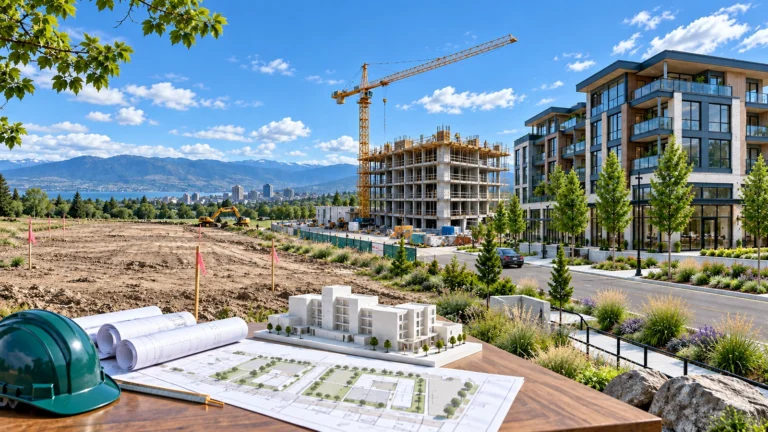
The real estate development process turns an idea, site, or underused property into a finished real estate asset. It can include finding an opportunity, controlling a site, testing feasibility, securing approvals, arranging capital, completing design and construction, and then leasing, selling, operating, or stabilizing the completed project.
For anyone trying to understand how to develop real estate, the key is to see development as a sequence of decisions rather than a single construction task.
Development is different from simply buying an existing investment property. When you buy a stabilized asset, much of the physical product already exists and the investment decision centers on the property’s current or achievable income, expenses, financing, condition, and market position. A development project requires you to create or materially transform the asset before that stabilized performance exists.
That creates opportunity, but also more moving parts. Market demand can change. A site can reveal physical or environmental constraints. Zoning or entitlement assumptions can fail. Design decisions can affect cost. Financing conditions can move. Construction can run over budget or schedule. Leasing or sales can take longer than expected.
For that reason, successful development is less about following a perfectly linear checklist and more about making a sequence of evidence-based decisions. At each stage, the developer asks a practical question: Is there enough evidence to keep committing time, money, and capital to this project?
Different industry frameworks group the work into different numbers of stages. Harvard Graduate School of Design Executive Education teaches primary stages and steps across opportunity identification, feasibility, site control, entitlements, team formation, financing, design, construction, marketing, and completed-asset management. CREDA Learning teaches a seven-stage development model that organizes value creation from land through development, operations, renovation, and redevelopment. This guide uses a practical seven-phase framework to explain the lifecycle from opportunity through stabilization; it is an organizing tool, not a claim that every project follows exactly seven official stages.
Important: Real estate development is highly local. Zoning, entitlement, environmental, building, permitting, financing, tax, and legal requirements vary by project and jurisdiction. Use this guide for education and process planning, then confirm project-specific requirements with qualified local professionals and agencies.
What Is the Real Estate Development Process?
The real estate development process is the coordinated work required to create, improve, reposition, or substantially redevelop real property. The developer typically acts as the organizer of that process rather than performing every technical task personally.
Depending on the project, development can involve landowners, brokers, attorneys, architects, engineers, surveyors, environmental consultants, lenders, equity investors, contractors, government agencies, leasing or sales teams, property managers, and asset managers. The developer’s job is to keep the project’s market case, physical plan, legal path, budget, financing, schedule, and exit strategy aligned well enough for the project to move forward.
Development can take many forms. A project might involve building apartments on vacant land, developing an industrial facility, constructing a retail center, subdividing residential lots, converting a building to a different use, or completing a major redevelopment of an obsolete property. The details differ, but the central decision problem is similar: Can the proposed use be legally approved, physically built, financed, delivered, and supported by the market at an acceptable risk-adjusted return?
That is why development analysis should start before construction. Construction is only one part of the lifecycle.
Real Estate Development vs. Buying an Existing Property
A stabilized acquisition starts with an existing asset. You can inspect the building, review historical operations, analyze current leases or rents, estimate normalized expenses, and compare the property with competing assets. There is still uncertainty, but much of the product already exists.
Development starts with more variables unresolved. The developer may need to determine what can be built, how much can be built, whether the site can support it, what approvals are required, what it will cost, how long it will take, how it will be financed, and whether future tenants or buyers will support the finished product.
This difference changes the nature of underwriting. A development pro forma is not just an analysis of a current income stream; it is a model of a future project whose cost, schedule, financing, approvals, and revenue assumptions may change as the project advances.
If you are evaluating an existing stabilized commercial property rather than creating or materially redeveloping one, see our guide to Commercial Real Estate Investing. For detailed deal-level return metrics and underwriting mechanics, use Real Estate Deal Analysis.
The Real Estate Development Lifecycle at a Glance
The phases below are deliberately broad. Some projects overlap them. Others repeat parts of an earlier phase when new information forces redesign, repricing, or a change in strategy.
| Phase | Core objective | Major decisions | Main risk | Evidence needed before proceeding |
|---|---|---|---|---|
| 1. Opportunity and project thesis | Define what problem or demand the project is intended to serve | Product type, target user, preliminary scope | Solving the wrong market problem | Initial market evidence and a coherent project thesis |
| 2. Site control and preliminary due diligence | Determine whether a specific site can support the concept | Site selection, control terms, early fatal-flaw screening | Committing to a constrained or unsuitable site | Title/access/zoning/utilities/physical baseline and workable site-control terms |
| 3. Feasibility and development underwriting | Test whether the concept can work economically, legally, physically, and operationally | Go, revise, renegotiate, or stop | Optimistic assumptions hiding an unworkable project | Feasibility findings, preliminary design, budget, schedule, and pro forma |
| 4. Entitlements, design, approvals, and permits | Obtain the land-use and project approvals needed to advance | Final program, approval path, design progression | Delay, denial, redesign, or scope loss | Required approvals plus sufficiently advanced design documentation |
| 5. Capitalization and preconstruction | Make the project financeable and construction-ready | Debt/equity mix, contractor strategy, final budget, start decision | Funding gap, cost escalation, incomplete documents | Committed capital, credible budget, construction documents, contingency plan |
| 6. Construction and delivery | Build the project while controlling cost, schedule, quality, and compliance | Change orders, draw approvals, sequencing, corrective action | Cost overrun, delay, defects, contractor failure | Verified progress, inspections, budget-to-complete, schedule-to-complete |
| 7. Completion, lease-up/sales, stabilization, and transition | Convert the completed project into its intended operating or exit state | Hold, refinance, recapitalize, sell, or continue lease-up | Weak absorption, operating shortfall, refinance or exit pressure | Occupancy/readiness, leasing or sales traction, operating performance, exit evidence |
The key point is not the number of phases. It is the decision discipline between them. A project should earn the right to consume more capital as uncertainty is reduced.
Phase 1: Define the Opportunity and Project Thesis
Development should begin with a reason for the project to exist, not merely with a piece of land that happens to be available.
A project thesis connects a market need with a product concept. It identifies the intended user, the type of real estate, the location characteristics that matter, and the broad economic logic behind the project.
For example, a thesis might be based on unmet demand for small-bay industrial space near a logistics corridor, a shortage of modern rental housing in a growing employment area, or the opportunity to reposition an obsolete commercial property for a more productive use.
At this stage, the objective is not to prove the entire deal. It is to screen whether the concept is credible enough to justify deeper work.
Early questions can include:
- Who is the intended tenant, resident, buyer, or end user?
- What problem does the project solve for that user?
- Is there evidence of demand, or only an assumption?
- What competing supply exists or is planned?
- What location characteristics are essential?
- What property type, scale, or unit mix may fit the opportunity?
- Is the target price point or rent level plausible for the intended user?
- What would have to be true for the project to create value?
This phase is only an initial market screen. For geographic research, supply-and-demand analysis, comparable-market evaluation, and market ranking, use our Real Estate Market Analysis guide.
A strong project thesis gives later specialists something concrete to test. A weak thesis causes the team to spend money refining a concept that never had a sound demand case.
Phase 2: Find and Control the Site
Once the concept is credible, the next challenge is finding a site that can support it while controlling that site without taking unnecessary risk before the major unknowns are resolved.
Site selection is more than finding land of the right size. A viable development site can depend on access, visibility, utility capacity, topography, drainage, soil conditions, flood exposure, environmental history, easements, title matters, surrounding uses, zoning, density, parking, setbacks, public infrastructure, and many other property-specific factors.
A developer therefore needs an early fatal-flaw screen. The goal is to identify conditions that could make the proposed project impossible, materially smaller, materially more expensive, or materially slower than the initial thesis assumes.
Site control does not always mean immediate ownership
Depending on the transaction, developers may use a purchase contract, option, ground lease, phased closing, or another negotiated structure to control a site while due diligence proceeds. The legal and economic terms vary widely, and the appropriate structure depends on the transaction.
The principle is more important than the instrument: preserve flexibility while expensive uncertainty remains unresolved.
A sophisticated purchase price cannot rescue a site that cannot legally or physically support the intended project.
Phase 3: Complete Due Diligence and Feasibility
Predevelopment becomes more rigorous once a real site and project concept are being evaluated. This is where the developer tries to replace assumptions with evidence.
Development due diligence is multidisciplinary because a project can fail for several different reasons. A site can have strong demand but poor access. It can be physically buildable but not entitled for the intended use. It can be legally permissible but financially infeasible. It can work on paper but require a capital structure the sponsor cannot obtain.
For that reason, feasibility should not be reduced to a single spreadsheet.
What Goes Into a Real Estate Development Feasibility Study?
A development feasibility study tests whether the project works across several connected dimensions. The exact scope varies by project, but the following framework helps prevent one favorable factor from masking a problem elsewhere.
| Feasibility area | Core question | Examples of evidence | Main failure signal |
|---|---|---|---|
| Market | Is there sufficient demand for the proposed product at realistic rents/prices and absorption? | Comparable projects, vacancy, rents/prices, pipeline, demographics, employment, user interviews | Revenue or absorption assumptions require outperforming the market without a defensible reason |
| Legal / entitlement | Can the proposed use, density, design, access, and site plan be approved? | Zoning review, land-use counsel, agency meetings, entitlement path, deed restrictions | Required use or density is unlikely to be approved or conditions destroy the economics |
| Physical / engineering | Can the site physically support the project? | Survey, civil concepts, geotechnical work, utility information, drainage/topography review | Site work, infrastructure, access, soils, or utilities create prohibitive cost or design constraints |
| Environmental | Are there environmental conditions or liability issues that require further evaluation or mitigation? | Environmental records, site history, environmental professional review, applicable assessments | Material contamination, remediation exposure, or unresolved environmental constraints alter risk/cost materially |
| Financial | Do projected revenues support total development cost and required return? | Development budget, schedule, pro forma, sensitivity analysis, comparable costs | Small changes in rent, cost, timing, or exit assumptions erase the economic case |
| Capital / financing | Can the required debt and equity be assembled on workable terms? | Lender feedback, equity discussions, sources-and-uses plan, contingency requirements | Capital gap, unacceptable recourse/risk, or funding conditions the project cannot satisfy |
| Execution / team | Can the sponsor and team actually deliver the project? | Relevant experience, consultant capacity, contractor input, governance plan | Critical expertise is missing or responsibilities are unclear |
| Exit / stabilization | Is there a credible path from completion to stable operation or sale? | Leasing/sales plan, operating budget, refinance assumptions, buyer/investor market | The project depends on an exit, refinance, or absorption level with weak support |
Environmental due diligence needs precise treatment
Environmental review is one area where overly broad advice can be misleading. The U.S. Environmental Protection Agency describes All Appropriate Inquiries (AAI) as a process for evaluating a property’s environmental conditions and potential liability for contamination. EPA also states that ASTM E1527-21 and E2247-23 can be used to satisfy AAI requirements when applicable to the relevant statutory protections.
That does not mean every development project is subject to one identical environmental process or that every transaction universally requires the same Phase I assessment. The appropriate scope depends on the property, transaction, financing, intended liability protections, lender requirements, and other facts. An environmental professional and project counsel can help determine what is appropriate for a specific acquisition.
Source: U.S. EPA: Brownfields All Appropriate Inquiries
How a Development Pro Forma Fits Into the Decision
A development pro forma is a financial model that organizes the project’s expected costs, timing, financing, revenues, and value so the developer can test whether the proposed business plan is economically viable.
Unlike a stabilized-property analysis, a development model must account for the period before the property generates its intended stabilized income. Depending on the project, that can include land cost, design and engineering, entitlement costs, permits and fees, construction, contingency, financing costs, taxes, insurance, marketing or leasing expenses, operating deficits during lease-up, and other project-specific costs.
The pro forma should not be treated as proof that the project will work. It is a decision model built from assumptions. Its value depends on how realistic those assumptions are and how clearly the model shows what happens when they change.
Useful questions include:
- What happens if construction costs rise?
- What happens if approvals take longer?
- What happens if rents or sales prices are lower than expected?
- What happens if absorption is slower?
- What happens if interest rates or financing terms change?
- What happens if the final buildable area is smaller?
- How much contingency and liquidity are available if several adverse changes occur together?
Detailed return formulas and underwriting mechanics are covered in Real Estate Deal Analysis. The important development-process principle is that the pro forma should evolve as the project moves from concept to evidence.
At the end of feasibility, the right answer is not always “go.” A disciplined developer should be willing to go, revise, renegotiate, or stop.
Phase 4: Entitlements, Design, Approvals, and Permits
A feasible concept still has to become an approvable and buildable project.
This phase often combines several workstreams. Architects and engineers advance the design. Land-use professionals coordinate the approval path. The developer refines the program, budget, schedule, and financing assumptions as agencies and consultants identify requirements.
The sequence varies significantly by jurisdiction and project type. A by-right project may have a different approval path from a rezoning, conditional-use approval, variance, subdivision, site-plan approval, or major redevelopment requiring multiple discretionary actions.
That makes early jurisdiction-specific research essential. Do not assume that an approval process from one city, county, or state applies to another.
Design is also an economic process
Design decisions affect revenue, cost, schedule, approvals, operations, and marketability. The goal is not simply to produce attractive drawings. The design must reconcile what users want, what the site supports, what the jurisdiction will approve, what codes and technical standards require, what the project can afford, and what can actually be constructed.
As design becomes more detailed, earlier assumptions should be tested again. A project that looked feasible using a conceptual area may change when parking, stormwater, setbacks, utility infrastructure, circulation, structural systems, or other constraints are fully developed.
Entitlements vs. Building Permits
The terms are sometimes used loosely, but they address different parts of the approval process. Exact terminology and sequencing vary by jurisdiction.
| Item | What it addresses | Typical timing | Why it matters |
|---|---|---|---|
| Land-use / entitlement approvals | Whether and under what conditions the proposed use, density, subdivision, site plan, or other discretionary land-use action may proceed | Often during predevelopment, before final construction authorization | Determines whether the proposed development rights and site plan can be established |
| Building and trade permits | Whether the submitted construction documents comply with applicable building, fire, mechanical, electrical, plumbing, and related requirements administered by the jurisdiction | Generally after sufficient design documentation is complete, subject to local sequencing | Provides authorization to perform regulated construction work |
| Other agency approvals | Project-specific matters such as access, utilities, environmental permits, stormwater, transportation, health, or other regulated systems | Can occur before, during, or alongside land-use/building approvals | A project may require approvals from multiple agencies, not just the building department |
An entitlement generally concerns the right or approval to develop the property in a proposed way. A building permit generally authorizes regulated construction based on reviewed plans. But local law controls, and some jurisdictions use different terms or combine processes differently.
U.S. Census Bureau construction definitions also distinguish permit-issuing areas from areas where building permits are not required. That is another reason not to treat one jurisdiction’s process as a national template.
Source: U.S. Census Bureau: Survey of Construction Definitions
Who Is on a Real Estate Development Team?
Real estate development is multidisciplinary. The exact team depends on project size, asset type, location, and complexity, but common participants include:
Developer / sponsor. Defines the project thesis, controls major decisions, assembles the team, coordinates capital, and carries responsibility for the overall business plan.
Broker or acquisition specialist. Helps source sites, analyze market availability, and negotiate transaction terms.
Real estate and land-use counsel. Advises on acquisition documents, title, entity matters, land-use approvals, contracts, and project-specific legal issues.
Architect. Converts the development program into a coordinated building design and works with engineers and consultants through design and permitting.
Civil engineer. Addresses site planning, grading, drainage, utilities, access, stormwater, and related civil infrastructure.
Surveyor. Establishes boundaries, easements, topography, and other site information required for design, title, and approvals.
Geotechnical and environmental consultants. Evaluate subsurface conditions, environmental history, contamination concerns, and other property-specific risks within their scopes.
General contractor or construction manager. Provides construction pricing and constructability input and ultimately manages project execution under the selected delivery structure.
Lender and equity capital. Provide capital subject to their underwriting, documentation, risk, and funding requirements.
Leasing, sales, property-management, and asset-management teams. Help translate the development concept into an operating or disposition strategy and provide market feedback before and after completion.
Other specialists may include traffic engineers, landscape architects, specialty engineers, code consultants, insurance professionals, tax advisers, cost estimators, public-affairs professionals, and many others.
A strong team does more than divide tasks. It creates a system for surfacing bad news early enough to act on it.
Phase 5: Capitalization and Preconstruction
As approvals and design advance, the project must become financeable and construction-ready.
Real estate development financing commonly combines sponsor equity, outside equity, and debt, although the exact structure varies by project and sponsor. Construction financing is fundamentally different from financing a fully stabilized property because funds are typically advanced as work progresses and because the collateral is still being created.
The Office of the Comptroller of the Currency groups acquisition, development, and construction financing within commercial real estate lending and emphasizes controls such as site inspections, lien-related controls, budget monitoring, loan-disbursement controls, and documentation showing whether remaining funds are adequate to complete a project. Those are lender-supervision principles, not a universal term sheet for every borrower, but they illustrate why development lenders focus heavily on execution and completion risk.
Source: OCC: Commercial Real Estate Lending
At the project level, preconstruction commonly includes:
- advancing construction documents;
- updating contractor pricing;
- reconciling design with budget;
- establishing contingencies;
- confirming the project schedule;
- negotiating construction and major consultant contracts;
- satisfying lender and equity conditions;
- preparing draw, reporting, and approval procedures;
- confirming insurance and risk-management requirements;
- aligning leasing or sales timing with delivery.
Detailed investor loan options, lender qualification, and financing mechanics are covered in Investment Property Financing. Within the development lifecycle, the central question is whether the capital structure can support the project through completion and stabilization, not merely whether a loan is available.
A project should not start construction simply because it has already consumed substantial predevelopment money. Sunk costs are not proof that the remaining risk is acceptable.
Phase 6: Construction and Project Delivery
Construction is where the project becomes physically visible, but it is not the beginning of development. By this point, the project should already have passed through market, site, feasibility, approval, design, budget, and financing decisions.
The developer’s role during construction is typically to coordinate and control rather than self-perform the work. Key responsibilities can include monitoring schedule and budget, reviewing change requests, tracking contingency, coordinating lender draws, resolving design questions, managing owner decisions, monitoring leasing or sales milestones, and preparing for turnover.
Construction risk is dynamic
A fixed construction budget is not enough. Developers need a current cost-to-complete view: what has been spent, what is committed, what remains, what changes are pending, and whether the available sources are still sufficient to finish the project.
Schedule control matters for the same reason. A delay can increase general conditions, financing carry, taxes, insurance, temporary facilities, marketing costs, and other time-dependent expenses. It can also push delivery into a different leasing or sales environment.
Common warning signs during construction include:
- change orders consuming contingency unusually early;
- unresolved design decisions delaying field work;
- subcontractor or material availability problems;
- repeated failed inspections;
- slower-than-planned work progress;
- payment, lien, or contractor disputes;
- utility or infrastructure delays;
- leasing or sales assumptions deteriorating while the project is still being built.
The practical objective is to identify variance early, quantify it, assign responsibility, and determine whether the project plan needs corrective action.
Phase 7: Completion, Lease-Up, Stabilization, and Exit
A building can be physically complete without being economically complete.
The last phase converts construction progress into the operating or exit outcome assumed in the business plan. Depending on the project, that may involve final inspections, certificates or approvals for occupancy, punch-list completion, tenant improvements, resident move-ins, lease-up, unit or lot sales, operating handoff, property-management systems, warranties, closeout documentation, and final project accounting. For recurring operating systems after delivery, see Landlord Operations.
For an income-producing property, stabilization generally means the asset has reached a level of occupancy and operating performance that is sufficiently established for the sponsor’s intended next step. The exact definition depends on the project, lender, investor, and business plan. There is no universal occupancy percentage or elapsed time that makes every property “stabilized.”
At this stage, the sponsor may decide to:
- continue holding the asset;
- refinance construction or bridge debt into longer-term financing;
- recapitalize with new equity;
- sell the completed property;
- continue lease-up before making a final capital decision.
The right decision depends on current operating evidence, capital-market conditions, tax consequences, investor objectives, and the project’s place within the sponsor’s broader portfolio.
For portfolio-level capital allocation, concentration, liquidity, and scaling decisions, see Real Estate Portfolio Management. For ownership/entity considerations, see Real Estate Ownership Structures. For project-specific tax consequences, see Real Estate Investing Taxes.
How Risk Changes Across the Development Lifecycle
Development risk does not simply disappear as a project advances. It changes form.
Early-stage risk is dominated by uncertainty. The developer may not yet know whether the market supports the concept, whether the site can be controlled on workable terms, whether the desired use can be approved, or what the true project cost will be.
Feasibility and entitlement risk is dominated by discovery and approvals. More information becomes available, but that information can invalidate the original thesis. The project may lose density, require infrastructure, face environmental constraints, or need substantial redesign.
Preconstruction risk is dominated by commitment. More money becomes nonrecoverable as design advances, contracts are signed, financing closes, and construction commitments are made.
Construction risk is dominated by execution. Cost, schedule, quality, contractor performance, inspections, and funding become central.
Lease-up or sales risk is dominated by market conversion. The completed product must attract actual tenants or buyers at economics that support the business plan.
This is why development is best managed as a series of decision gates. The question is not “Have we reached the next stage?” but “Has the evidence improved enough to justify the next irreversible commitment?”
Common Real Estate Development Mistakes
1. Falling in love with the site before proving the project
An attractive parcel is not automatically a viable development opportunity. Developers can overpay or accept unfavorable terms when they start with emotional attachment rather than disciplined screening.
2. Treating zoning as the entire approval analysis
A zoning designation may not answer every question about density, site planning, access, utilities, subdivision, design standards, environmental requirements, or other approvals. The actual path must be confirmed for the specific project and jurisdiction.
3. Using a pro forma as confirmation instead of a stress test
A model can be made to work by changing assumptions. The better question is whether those assumptions are supported by evidence and whether the project survives realistic adverse scenarios.
4. Underestimating time as a cost
Delays can increase financing carry, taxes, insurance, consultant costs, contractor costs, and opportunity cost. A schedule is therefore part of the financial model, not just a project-management document.
5. Advancing design without continuous cost feedback
A project can become technically sophisticated and economically unbuildable if design moves faster than budgeting and constructability review.
6. Treating financing as a late-stage administrative task
A project can be feasible in theory but unfinanceable for a particular sponsor, lender market, capital stack, or risk profile. Capital strategy should be tested early and refined as the project matures.
7. Starting construction without enough contingency or liquidity
A budget contingency is not a substitute for sponsor liquidity, and neither protects against every risk. Projects need a credible plan for adverse changes that occur after construction begins.
8. Waiting until completion to think about operations or exit
Property management, leasing, sales, tenant requirements, and operating costs can influence design and construction decisions. The end state should shape the project long before the building is finished.
9. Allowing sunk costs to drive the next decision
Predevelopment money already spent cannot justify committing more money to a project whose economics or approval path have materially deteriorated.
10. Failing to define who can make which decisions
Development teams move slowly when every issue requires escalation or when consultants receive conflicting direction. Clear governance, reporting, approval limits, and accountability improve decision speed and reduce rework.
A Practical Go / Revise / Stop Development Checklist
Before increasing the project’s capital commitment, ask whether the evidence supports each of the following:
Market
- Is the target user clearly defined?
- Is demand supported by current market evidence?
- Are rent, price, vacancy, and absorption assumptions defensible?
- Has competing and planned supply been considered?
Site and control
- Is the site under workable control?
- Are title, access, easement, utility, and boundary issues understood to the required level?
- Have major physical and infrastructure constraints been identified?
Legal and approvals
- Is the current land-use status understood?
- Is the required entitlement and permitting path documented?
- Are critical agency or third-party dependencies identified?
- Does the schedule reflect realistic approval uncertainty?
Physical and environmental
- Has the project team investigated soils, drainage, utilities, access, and other site conditions appropriate to the stage?
- Has environmental diligence been scoped appropriately for the property and transaction?
- Are major mitigation or infrastructure costs reflected in the budget?
Economics
- Does the budget reflect the current design and current market pricing?
- Is contingency appropriate to the project’s remaining uncertainty?
- Has the schedule been translated into carrying costs?
- Has the pro forma been stress-tested rather than merely balanced?
Capital
- Is there a credible debt-and-equity plan?
- Are lender and investor assumptions based on current conversations rather than generic expectations?
- Is there enough liquidity to cover required equity, contingencies, and timing variance?
Execution
- Are the major team roles filled with appropriately qualified professionals?
- Are responsibilities and decision rights clear?
- Is the contractor or construction strategy credible for the project?
Exit and stabilization
- Is there a realistic lease-up, sales, hold, refinance, or disposition path?
- Do the exit assumptions still make sense under current market conditions?
- If the original exit becomes unavailable, does the project have a viable alternative?
If a critical answer is “no,” the next step may be to revise the project, renegotiate terms, perform more diligence, or stop, not automatically to advance.
Frequently Asked Questions
What is the real estate development process?
The real estate development process is the coordinated lifecycle for creating or materially transforming a property, from opportunity identification and site control through feasibility, approvals, design, financing, construction, completion, lease-up or sales, and stabilization or exit.
What are the main stages of real estate development?
There is no single official stage count used across the entire industry. Different frameworks group the work differently. A practical model is: opportunity and project thesis; site control; feasibility; entitlements/design/approvals; capitalization and preconstruction; construction; and completion/stabilization.
What is predevelopment in real estate?
Predevelopment generally refers to the work completed before major construction begins. It can include site control, due diligence, feasibility, entitlement work, design, engineering, budgeting, scheduling, financing preparation, and permitting. The exact scope varies by project.
What is a real estate development feasibility study?
A development feasibility study tests whether a proposed project is likely to work across market, legal, physical, environmental, financial, financing, execution, and exit dimensions. Its purpose is to identify constraints and determine whether the project should move forward, change, or stop.
What is a development pro forma?
A development pro forma is a financial model that estimates project costs, timing, financing, revenue, and value. It helps the developer test whether the proposed project is economically viable and how sensitive the result is to changes in assumptions.
What are real estate entitlements?
Entitlements generally refer to land-use approvals or development rights needed to implement a proposed project, such as rezoning, conditional-use approval, subdivision approval, variances, or site-plan approval. The terminology and requirements depend on local law.
What is the difference between entitlements and building permits?
Entitlements generally establish whether and how a site may be developed from a land-use perspective. Building permits generally authorize regulated construction based on reviewed plans. The sequence and terminology vary by jurisdiction, and other agency approvals may also be required.
How long does real estate development take?
There is no universal timeline. Duration depends on site acquisition, project size, entitlement complexity, design, financing, permitting, infrastructure, construction, leasing or sales, and local agency processes. A smaller by-right project may move much faster than a complex project requiring major discretionary approvals or infrastructure.
What are the biggest risks in real estate development?
Major risks can include weak market demand, site constraints, entitlement failure or delay, environmental issues, cost escalation, financing gaps, interest-rate changes, construction delays, contractor problems, slower leasing or sales, and exit-market changes. The dominant risk changes as the project advances.
Who is on a real estate development team?
A development team commonly includes the developer, attorneys, architects, engineers, surveyors, environmental consultants, contractors, lenders, equity investors, brokers, and leasing, sales, property-management, or asset-management professionals. Complex projects may require many additional specialists.
What is stabilization in real estate development?
Stabilization is the transition from a newly completed or leasing project to an established operating state that supports the sponsor’s next capital decision. The exact occupancy, operating history, or performance threshold used to define stabilization depends on the project, lender, investor, and business plan.
What is the difference between real estate development and construction?
Construction is one phase of development. Real estate development includes the broader business process of identifying an opportunity, securing a site, testing feasibility, obtaining approvals, arranging capital, managing design and construction, and transitioning the completed asset into operation or sale.
What is the difference between development and redevelopment?
Ground-up development typically creates a new project on vacant or substantially cleared land. Redevelopment materially changes or repositions an existing property or previously developed site. Redevelopment may still require acquisition, feasibility, entitlements, financing, major construction, lease-up, and stabilization.
Where to Go Next
The real estate development process connects market selection, underwriting, financing, ownership, operations, and portfolio strategy. Use the next guide that matches the decision you are working on:
| If you need to… | Continue with… |
|---|---|
| Choose and compare markets | Real Estate Market Analysis |
| Underwrite returns and deal metrics | Real Estate Deal Analysis |
| Understand investment-property financing | Investment Property Financing |
| Evaluate stabilized commercial properties | Commercial Real Estate Investing |
| Plan property operations after delivery | Landlord Operations |
| Choose an ownership or entity structure | Real Estate Ownership Structures |
| Understand real estate investing tax issues | Real Estate Investing Taxes |
| Manage growth and capital allocation across multiple properties | Real Estate Portfolio Management |
Development rewards disciplined sequencing. The project should become more specific as evidence improves, while the sponsor retains enough flexibility to revise or stop when the evidence changes. The goal is not to eliminate uncertainty; it is to make larger commitments only when the project’s market, legal, physical, financial, and execution case has become strong enough to justify them.