
House Flipping: How to Flip a House, Budget Costs, and Estimate Profit
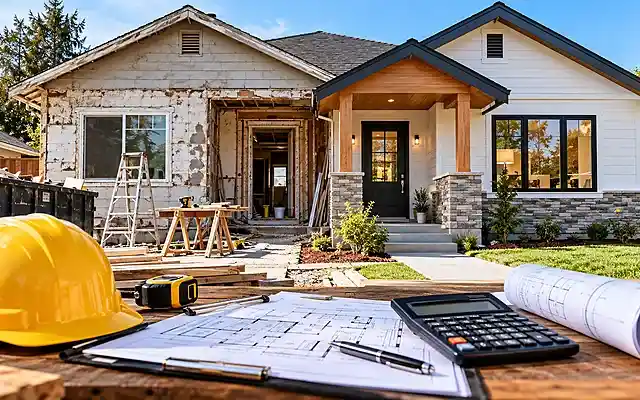
House flipping is a real estate investment strategy in which an investor buys a property, improves it, and resells it rather than holding it as a long-term rental.
The basic idea sounds simple: Buy → Renovate → Resell
But the economics are more demanding than that sequence suggests.
A profitable flip depends on buying at a workable price, estimating the property’s after-repair value realistically, controlling renovation costs, carrying the property long enough to complete the project, financing it on terms the deal can support, and selling it for enough to cover every project cost and still leave an acceptable profit.
That means a property is not a good flip simply because it looks inexpensive or needs work.
The better question is:
Can this specific property be purchased, renovated, held, financed, and resold at a price that leaves enough profit for the risks involved?
This guide explains how house flipping works, how to estimate after-repair value, how to build the renovation and cost model, how to calculate a maximum purchase price, and how to stress-test the deal before committing capital.
What Is House Flipping?
House flipping generally means buying residential property with the intention of improving it and reselling it for a profit.
The investor usually expects to create value through some combination of:
- buying below the property’s potential improved value;
- repairing deferred maintenance;
- improving condition or functionality;
- correcting problems that discourage traditional buyers;
- managing renovation efficiently; and
- selling into a market with sufficient buyer demand.
The important distinction is that the profit does not come from renovation alone.
A renovated property can still lose money if the investor:
- pays too much at acquisition;
- overestimates the resale value;
- underestimates repairs;
- overlooks financing costs;
- ignores taxes, insurance, utilities, or other carrying costs;
- takes longer than expected;
- pays more selling costs than modeled; or
- has too little margin for unexpected problems.
A disciplined house-flipping analysis therefore treats the project as a complete acquisition, construction, financing, holding, and resale transaction.
If you are still comparing flipping with other approaches, start with our Real Estate Investment Strategies guide.
House Flipping vs. BRRRR and House Hacking
House flipping, BRRRR, and house hacking can all involve residential property, but they are different strategies because they are designed around different outcomes.
| Strategy | Basic Sequence | Primary Exit or Objective |
|---|---|---|
| House flipping | Buy → Renovate → Resell | Sell the improved property |
| BRRRR | Buy → Rehab → Rent → Refinance → Retain/Repeat | Keep the property as a rental |
| House hacking | Buy → Occupy → Rent part of the property | Combine personal occupancy with rental income |
A house flipper generally wants the completed property sold.
A BRRRR investor generally wants the completed property rented and retained.
The refinance is part of the strategy because the investor hopes to transition from acquisition or renovation financing into longer-term ownership.
For the retain-and-refinance version of the renovation strategy, see our BRRRR Method guide.
A house hacker has a different objective again. The investor lives in the property while renting another part of it.
For the owner-occupancy strategy, see our House Hacking guide.
These distinctions matter because the same property can produce very different conclusions depending on the intended exit.
A house may be an attractive rental but a weak flip. Another property may have strong resale potential but poor long-term rental economics.
Define the strategy before you underwrite the property.
Step 1: Define Your Market and Property Criteria
Before analyzing individual houses, decide what kind of flip you are prepared to execute.
That starts with the market. A flipper may care about:
- buyer demand;
- transaction volume;
- days on market;
- price reductions;
- resale liquidity;
- local price points;
- renovation labor and material availability;
- permitting complexity;
- seasonality; and
- how quickly renovated properties actually sell.
A market with attractive theoretical resale spreads can still be difficult for flipping if buyer demand is thin or finished homes take a long time to sell.
For the broader market-selection process, use our Real Estate Market Analysis guide.
Define the Property Buy Box
Within the market, establish a property buy box.
That may specify:
- neighborhood or geographic area;
- property type;
- minimum and maximum size;
- price range;
- age;
- renovation severity;
- bedroom and bathroom count;
- lot characteristics;
- target resale price; and
- automatic disqualifiers.
You should also decide how much renovation complexity you are prepared to manage.
A cosmetic renovation involving finishes and minor repairs is a different project from a house requiring structural work, major mechanical replacement, extensive water remediation, additions, layout changes, or complex permitting.
Finding potential properties is its own discipline. Our Finding Investment Properties guide covers buy boxes, on-market opportunities, off-market sourcing, wholesalers, direct outreach, investor networks, and lead qualification in more detail.
Step 2: Estimate After-Repair Value
After-repair value, or ARV, is the estimated value of the property after the planned renovation has been completed.
ARV is one of the most important assumptions in a house flip because it establishes the approximate revenue side of the project.
If the ARV is too optimistic, almost every other calculation can appear stronger than it really is.
Use Comparable Sales
A practical ARV analysis starts with relevant comparable sales.
Look for recently sold properties that are reasonably similar to the subject property in characteristics such as:
- location;
- property type;
- size;
- lot;
- age;
- bedroom and bathroom count;
- design;
- condition;
- renovation quality;
- garage or parking; and
- other features that materially affect value.
Fannie Mae’s comparable-sales guidance requires appraisers to select the most appropriate comparables and account for factors that affect value, including relevant physical and legal characteristics. That principle is useful for investors even though an investor’s ARV estimate is not an appraisal.
The closer the comparable evidence is to the finished property you actually expect to deliver, the more defensible the estimate becomes.
Do Not Start With the Number You Need
One of the easiest ways to overpay for a flip is to decide what ARV must be for the deal to work and then search for comparables that support that number.
Reverse the process. Estimate value from market evidence first. Then ask whether the deal works at that value.
Treat Automated Values as a Screen, Not Proof
Online automated valuations can provide context, but they may not know:
- the property’s current physical condition;
- the exact renovation scope;
- the quality of the planned finishes;
- unpermitted changes;
- functional issues;
- street-level differences; or
- recent local buyer preferences.
A flip should not depend on a single automated estimate.
Step 3: Build the Rehab Scope and Budget
The renovation budget should begin with a scope of work, not a round-number allowance.
Break the project into relevant categories such as:
- demolition;
- structural work;
- roofing;
- foundation;
- electrical;
- plumbing;
- HVAC;
- windows and doors;
- insulation;
- drywall;
- flooring;
- kitchen;
- bathrooms;
- interior paint;
- exterior work;
- landscaping;
- appliances;
- permits;
- cleanup; and
- final punch-list items.
Not every project will need every category. The objective is to make the scope specific enough that contractor estimates can be compared meaningfully.
Compare Like With Like
Three contractor bids do not tell you much if all three contractors are pricing different scopes.
A lower bid may simply exclude:
- materials;
- permits;
- demolition;
- disposal;
- fixtures;
- finish work;
- project supervision; or
- an important repair included in another estimate.
Before comparing prices, compare what each proposal actually includes.
Include Contingency
Renovation projects involve uncertainty.
Walls can conceal damage. Mechanical systems can fail inspection. Water intrusion can reveal more extensive deterioration than expected.
Material availability can change. A municipality may require additional work before approving the project.
There is no single contingency percentage that is appropriate for every property.
The amount should reflect factors such as:
- how thoroughly the property has been inspected;
- age and condition;
- complexity;
- structural uncertainty;
- the extent of demolition;
- contractor certainty; and
- the consequences if the scope expands.
A project with almost no margin for unexpected work is fragile even if the base-case budget looks profitable.
Pre-1978 Properties Require Additional Attention
Federal lead-safe renovation requirements can affect older properties.
The EPA explains in its guidance for house flippers that Renovation, Repair and Painting requirements can apply when covered renovation work disturbs painted surfaces in pre-1978 housing.
Depending on who performs the work and the circumstances, certification, training, work practices, and recordkeeping requirements may apply.
State-authorized programs can also operate in place of the federal program in certain jurisdictions.
Verify the applicable requirements before work begins rather than treating lead compliance as an issue to solve after demolition starts.
Step 4: Calculate the Maximum Purchase Price
A house flipper should not start with the seller’s asking price and try to make the numbers fit.
A more disciplined approach works backward from a conservative resale value.
A practical framework is:
Maximum purchase price = conservative ARV − rehab − acquisition costs − financing costs − holding costs − selling costs − contingency − required target profit
The calculation forces every major project cost into the purchase decision.
For example, if the resale value appears strong but the required renovation is large, the property may only work at a substantially lower acquisition price.
The 70% Rule
You may hear investors refer to the 70% rule as a quick screening method for flips.
In simplified form, it commonly starts with a percentage of ARV and subtracts repairs. That can be useful as a rough screening heuristic, but it should not replace actual underwriting.
A fixed percentage cannot know your:
- market;
- financing terms;
- acquisition costs;
- selling costs;
- insurance;
- property taxes;
- holding period;
- renovation uncertainty;
- required profit; or
- transaction structure.
Two investors can analyze the same property and rationally arrive at different maximum prices because their costs, capital, timelines, and risk tolerances differ.
Use explicit costs whenever you have them.
Step 5: Choose the Financing Structure
House flips can be financed in different ways. Depending on the investor, property, and project, capital may come from:
- cash;
- private money;
- bridge financing;
- hard-money-style project financing;
- seller financing;
- renovation-oriented lending;
- partnership capital; or
- a combination of sources.
Financing should be evaluated as part of the project economics rather than treated only as a way to close the purchase.
Relevant terms can include:
- loan amount;
- required equity;
- interest;
- lender fees or points;
- renovation funding;
- draw procedures;
- inspection requirements;
- maturity;
- extension options;
- extension fees;
- guarantees; and
- repayment requirements.
The longer the project takes, the more important time-dependent financing and carrying costs become.
A loan that appears acceptable on a six-month project can become much more expensive if the renovation, permitting, or resale process takes substantially longer.
For the broader financing framework, see Investment Property Financing.
Step 6: Complete Due Diligence Before Closing
A flip is not simply a renovation budget attached to a purchase price.
Before acquiring the property, verify the assumptions that could change the project materially.
Depending on the property and transaction, due diligence may include:
Ownership and Title
Confirm the seller’s ability to convey the property and review relevant title issues, liens, easements, or other matters with the appropriate professionals.
Property Condition
A renovation budget based only on listing photos is weak evidence.
Investigate major systems and conditions that could materially affect cost, including:
- foundation;
- structure;
- roof;
- moisture intrusion;
- plumbing;
- electrical systems;
- HVAC;
- sewer or septic;
- environmental concerns; and
- other significant defects.
Renovation Feasibility
Confirm that the planned work can actually be completed.
That may require checking:
- zoning;
- permits;
- code requirements;
- property-use restrictions;
- contractor availability;
- utility constraints; and
- local approval processes.
These requirements vary by jurisdiction.
Insurance
A property that is vacant, distressed, under construction, or substantially renovated may have different insurance considerations from a stabilized owner-occupied house.
Obtain coverage information relevant to the actual project rather than assuming the seller’s insurance situation will transfer to you.
Exit Constraints
Think about the future buyer before you purchase.
Ask:
- Who is likely to buy this property after renovation?
- What financing might that buyer use?
- Will the finished property support the expected appraisal?
- Are there title, condition, permit, or timing issues that could interfere with financing?
A flip should be underwritten backward from a realistic exit, not only forward from acquisition.
For a broader property-underwriting framework, see Real Estate Deal Analysis.
Step 7: Control the Renovation
Once the project begins, the underwriting becomes an operating plan. The goal is not simply to make the property look better.
The goal is to deliver the defined scope at an acceptable cost and on a timeline that protects the investment.
Useful controls can include:
- a written scope of work;
- contractor agreements;
- project milestones;
- payment or draw schedules;
- documentation of completed work;
- written change orders;
- updated cost-to-complete tracking;
- permit and inspection tracking;
- schedule updates; and
- final completion verification.
Control Change Orders
Some changes are unavoidable.
The danger comes when a project accumulates many individually reasonable changes without anyone updating the full financial model.
If the renovation budget increases, update the projected profit immediately. Do not wait until the property sells to discover what the project actually cost.
Protect the Schedule
Time matters because delays can increase:
- interest;
- insurance;
- utilities;
- taxes;
- security;
- maintenance;
- lender extension costs; and
- exposure to changing market conditions.
A one-month delay does not affect every flip equally. But the model should make the cost of additional time visible.
Step 8: Plan the Resale Before the Rehab Is Finished
The resale strategy should influence the renovation plan from the beginning.
You should already understand:
- the likely buyer profile;
- competing homes;
- the relevant resale price range;
- expected finish level;
- appraisal support; and
- the amount of inventory buyers will see when the property is listed.
Over-improving can be as damaging as under-improving if buyers will not pay enough for the additional work.
Recheck the Market Before Listing
ARV is an estimate made before the project ends. The market may change while you renovate.
Before listing, update:
- recent comparable sales;
- active competition;
- pending transactions where useful;
- days on market;
- price reductions;
- buyer activity; and
- the condition of competing homes.
Do not assume the original ARV remains correct simply because the renovation followed the original plan.
FHA Resale Timing Can Matter
If a future buyer may use FHA-insured financing, resale timing can affect eligibility.
Under HUD’s current FHA property-flipping guidance, a resale contract executed within 90 days of the seller’s acquisition generally is not eligible for FHA insurance unless an exception applies.
For resales occurring between 91 and 180 days, a second appraisal may be required in specified circumstances.
Because eligibility rules and exceptions can change, verify the current FHA requirements when planning the exit.
Step 9: Calculate House-Flipping Profit
The most basic calculation is:
Total project cost = purchase price + acquisition costs + rehab + contingency + financing costs + holding costs + selling costs.
Then: Net profit = resale price − total project cost
Suppose a project has:
- $350,000 resale price; and
- $296,000 total project cost.
Net profit would be: $350,000 − $296,000 = $54,000
That is the project profit before considering any tax consequences specific to the investor.
Project Profit Margin
One way to express the project result is: Project profit margin = net profit ÷ resale price
Using the same example: $54,000 ÷ $350,000 = 15.4%
That tells you how much of the resale price remains as modeled profit after the defined project costs.
Simple Project Cash ROI
You may also want to understand the return relative to the investor’s actual cash committed.
A simple form is:
Simple project cash ROI = net profit ÷ investor cash actually invested
This is a simple project-level return on cash invested. It is not annualized and should not be confused with rental-property cash-on-cash return.
The denominator must be clearly defined.
If financing is used, investor cash might include items such as:
- down payment;
- acquisition cash;
- lender fees paid from cash;
- rehab cash not funded by the lender;
- carrying costs; and
- other cash contributions.
Different financing structures can therefore produce different simple cash ROI figures even when the underlying property’s total project profit is the same.
Worked House-Flipping Example
Consider an illustrative single-family flip.
These numbers are for education only. They do not represent national averages, expected returns, or typical project costs.
| Project Item | Amount |
|---|---|
| Expected resale price / ARV | $350,000 |
| Purchase price | $190,000 |
| Acquisition and closing costs | $5,000 |
| Base rehab estimate | $47,500 |
| Renovation contingency | $7,500 |
| Financing costs | $15,000 |
| Holding costs | $7,000 |
| Selling and exit costs | $24,000 |
| Total project cost | $296,000 |
| Illustrative net profit | $54,000 |
| Project profit margin | 15.4% |
The base case looks profitable. But a flip should not be evaluated using only the base case.
Downside Scenario 1: ARV Falls 5%
If the eventual resale price is 5% below the original $350,000 estimate:
New resale price = $332,500
If the original project costs remain $296,000: Profit = $36,500
The $17,500 decline in resale value reduces profit by the same amount.
Downside Scenario 2: Rehab Costs Increase by $15,000
Suppose additional renovation work increases the project’s rehab-related cost by $15,000 beyond the original budget and contingency.
New total project cost = $311,000
At a $350,000 resale price: Profit = $39,000
Downside Scenario 3: The Project Takes Longer
Suppose renovation and resale delays increase financing and holding costs by an additional $6,000.
New total project cost = $302,000
At the original $350,000 resale price: Profit = $48,000
The additional $6,000 is an illustrative scenario input. It is not an estimate of what a particular delay will cost.
Actual delay costs depend on the project’s financing, taxes, insurance, utilities, security, maintenance, and other time-dependent expenses.
Downside Scenario 4: Lower ARV and Higher Rehab Cost
If the resale price falls to $332,500 and rehab-related costs increase by $15,000:
- resale price = $332,500;
- total project cost = $311,000.
Then: Profit = $21,500
| Scenario | Resale Price | Total Cost | Profit |
|---|---|---|---|
| Base case | $350,000 | $296,000 | $54,000 |
| ARV 5% lower | $332,500 | $296,000 | $36,500 |
| Rehab costs $15,000 higher | $350,000 | $311,000 | $39,000 |
| Financing and holding costs $6,000 higher | $350,000 | $302,000 | $48,000 |
| Lower ARV plus $15,000 rehab overrun | $332,500 | $311,000 | $21,500 |
The project remains profitable in these simplified scenarios, but the margin changes dramatically.
That is why the important question is not merely whether the base case has a profit. Ask how much room exists if important assumptions are wrong.
Taxes and Compliance Issues House Flippers Should Not Ignore
House flipping can create tax and regulatory issues that differ from long-term property ownership.
Federal Tax Treatment Depends on the Facts
Do not automatically assume that profit from a flip will receive long-term capital-gain treatment simply because real estate was sold.
The IRS explains in Publication 544 that property held mainly for sale to customers in a trade or business is not treated as a capital asset.
The IRS also discusses real estate dealers in Publication 334.
The classification depends on the investor’s actual activity and circumstances. IRS guidance defines a real estate dealer as someone engaged in the business of selling real estate to customers for profit, while Publication 544 excludes property held mainly for sale to customers in a trade or business from capital-asset treatment.
A qualified tax professional should evaluate how those rules apply to the investor’s specific activity.
Lead-Safe Renovation Requirements
For covered pre-1978 properties, EPA Renovation, Repair and Painting requirements can apply to house-flipping activity.
Certification and responsibility can depend on whether the investor performs the work, uses employees, or hires an outside renovation firm.
Verify current federal or authorized state-program requirements before beginning covered work.
Permits and Contractor Requirements
Building permits, trade licensing, inspection requirements, occupancy approvals, and contractor laws vary by location and project type.
Do not assume that because a particular renovation is commonly performed in another market it can be completed the same way in yours.
Seller Disclosure and Transaction Rules
Seller disclosure requirements and other transaction obligations vary by state and sometimes by local law.
A recent renovation does not eliminate those obligations.
Use qualified local professionals when the transaction raises legal, tax, licensing, title, disclosure, or permitting questions.
Biggest House-Flipping Risks
House flipping can fail in several ways at the same time.
Overestimating ARV
An optimistic resale estimate can justify a purchase price the market does not support.
Underestimating Renovation
Hidden conditions and incomplete scopes can consume the project’s profit margin.
Financing Risk
Interest, fees, maturity dates, draw delays, and extension costs can affect both cash needs and profitability.
Contractor Risk
Poor workmanship, abandonment, scheduling problems, change orders, and coordination failures can delay or increase the cost of the project.
Permit and Code Delays
Work that cannot pass inspection or receive required approvals can delay completion and resale.
Market Risk
Buyer demand can weaken while the project is underway.
Comparable sales can also shift below the original ARV.
Appraisal Risk
Even if a buyer agrees to the asking price, the buyer’s lender may rely on an appraisal that does not support the contract price.
Selling-Time Risk
A property that takes longer to sell creates additional carrying costs and ties up investor capital.
Thin-Margin Risk
A projected profit may look positive but still provide too little cushion for the amount of uncertainty involved.
The thinner the margin, the less room the project has for ordinary forecasting errors.
When Should You Walk Away From a Flip?
Passing on a property is part of flipping successfully.
Consider walking away or renegotiating when:
- the project only works using the most optimistic ARV;
- the renovation scope remains materially uncertain;
- contractor pricing cannot be validated;
- required permits or approvals create unacceptable uncertainty;
- financing does not support a realistic project timeline;
- there is no meaningful contingency;
- the resale depends on one unusually high comparable;
- the target buyer pool is too narrow;
- carrying costs become unmanageable in a longer timeline; or
- the projected profit is too small for the identified risks.
Money already spent evaluating a property is not a reason to buy it.
The purpose of due diligence is to make it easier to stop before a weak project becomes an expensive one.
House-Flipping Checklist
Before committing to a flip, verify that you can answer the following questions:
- What is the strategy and intended resale exit?
- Does the property fit the defined buy box?
- What evidence supports the ARV?
- Which comparable sales are most relevant?
- What is the complete renovation scope?
- Which contractor estimates support the budget?
- What contingency is appropriate for the property’s uncertainty?
- What are the acquisition and closing costs?
- What financing will be used?
- What are the interest, fees, draw, maturity, and extension terms?
- What will the property cost to hold each month?
- What selling and exit costs are included?
- What is the total project cost?
- What is the projected net profit?
- What happens if ARV falls?
- What happens if renovation costs rise?
- What happens if the project takes longer?
- What permits, inspections, lead rules, or local requirements apply?
- Can the finished property support the intended resale price?
- Is the projected margin large enough for the risks you are taking?
If you cannot answer an important question, identify what evidence would answer it before committing capital.
Final Thoughts
House flipping is a project-based investment strategy. The property has to survive more than one test.
The acquisition price has to work. The renovation has to be feasible. The ARV has to be supported. The financing has to survive the timeline.
The resale market has to support the exit. And enough margin has to remain after all of those costs for the project to justify its risks.
The most useful discipline is to make every major assumption visible before you buy. Estimate ARV from evidence. Build the renovation scope before relying on the budget. Model financing and carrying costs.
Stress-test the resale value, construction cost, and timeline. Then decide whether the deal still deserves your capital.
A good flip is not one where the numbers can be made to work. It is one where the numbers still make sense after realistic costs and reasonable downside are included.